A Rusted Heat Exchanger Is a Carbon Monoxide Risk You Can't Ignore
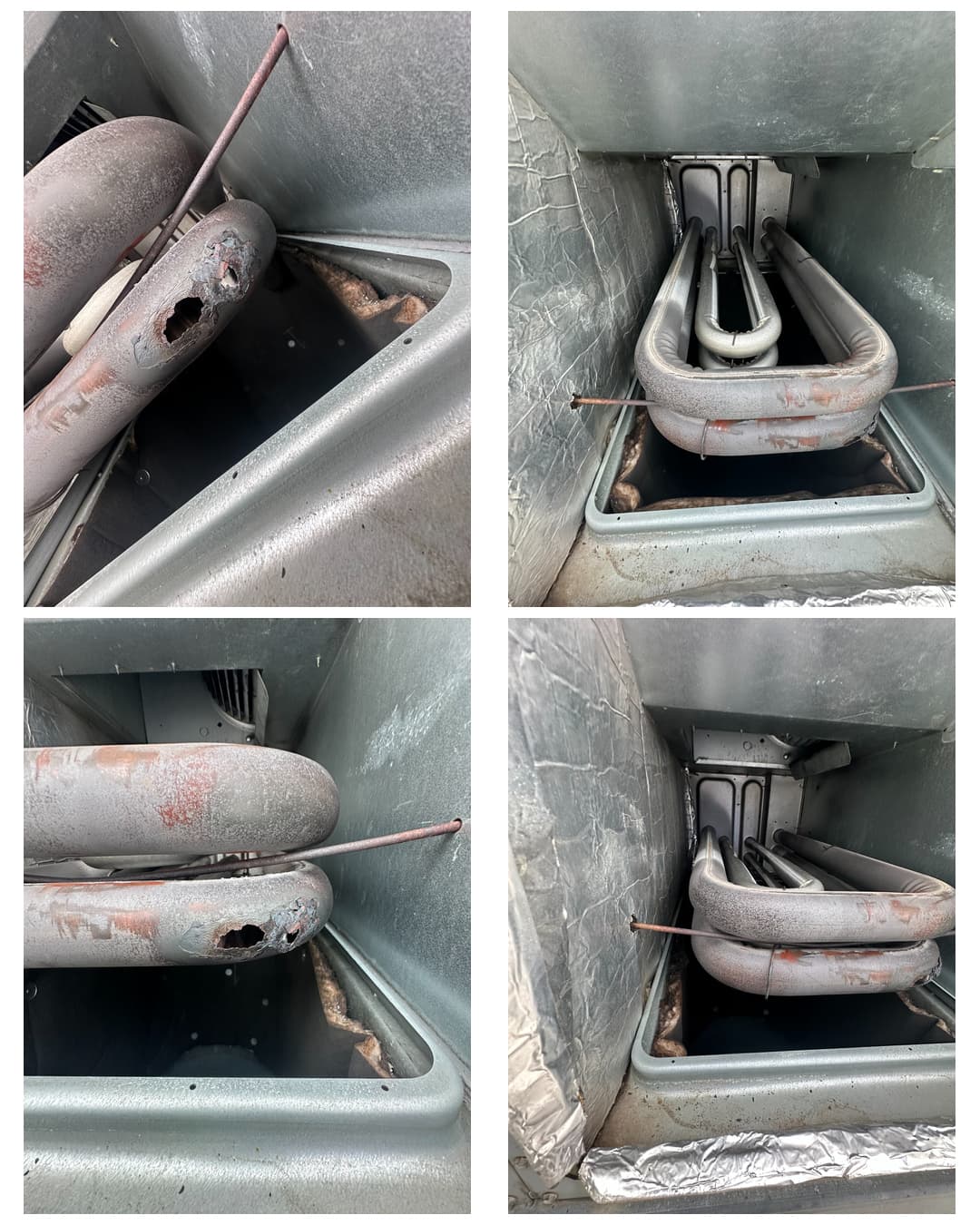
This is what a failing heat exchanger actually looks like up close. Rust has eaten clean through the metal tubes - leaving visible holes that should never be there. It's one of the most serious furnace problems we come across, and it's also one of the most commonly overlooked.
Here's why it matters. The heat exchanger sits between the combustion side of your furnace and the air that gets pushed through your home. When it's intact, it keeps those two worlds separate. When it cracks or corrodes through like this, combustion gases - including carbon monoxide - can mix right into your breathing air. No smell. No color. No warning until someone gets sick.
Carbon monoxide is called the silent killer for a reason. Your furnace can be running, your heat can be coming on, and you'd have no idea there's a problem. That's what makes a failed heat exchanger so dangerous. It doesn't announce itself.
This is exactly why a proper furnace inspection matters before the heating season gets underway. We pull access panels, we look at components you'd never see otherwise, and we catch things like this before they become an emergency. A furnace that looks fine from the outside can still be hiding a serious hazard inside.
At Honor Heating and Air, we don't do surface-level checkups. When we inspect a furnace, we're looking at the whole picture - heat exchanger included. If something's wrong, we'll show you exactly what we found and walk you through your options. No guesswork, no pressure.